Blue Dawn

Lead with insight - keep every cadet seen, supported, and on track.

Complex SystemB2B2CWeb AppOperational Dashboard
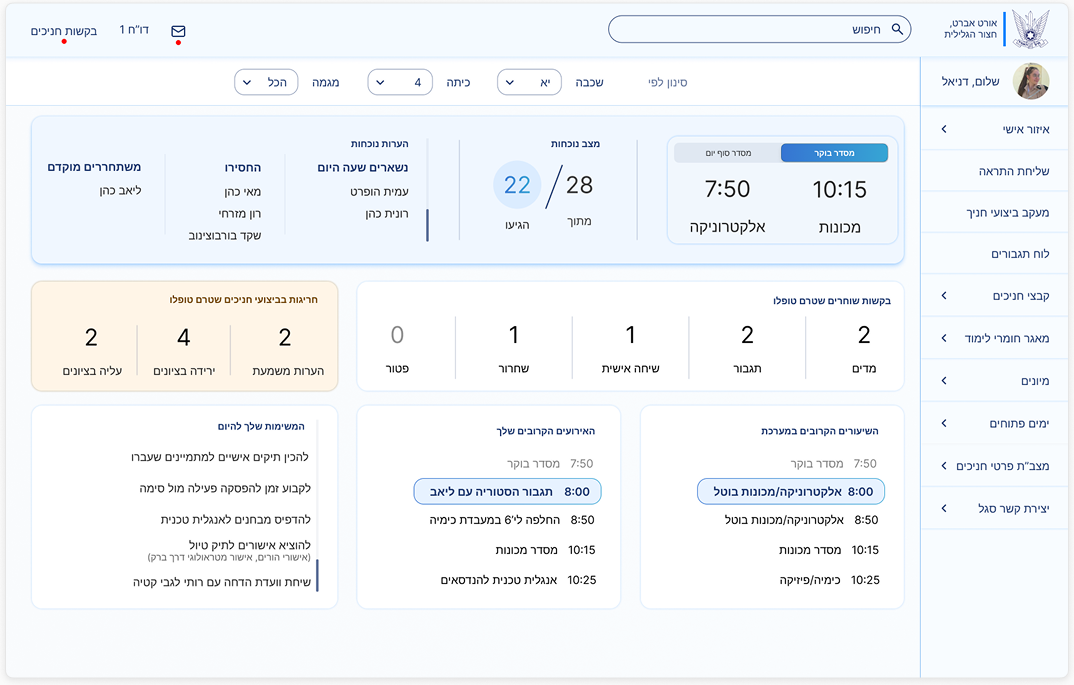
Blue Dawn dashboard showing cadet information and operational updates

Overview

To understand how the system works, it's important to first understand the organizational structure it was designed for. The chart below shows the chain of command — from the district commander at the top down to the cadets at its base:

  1. District CommandersOversee Branch Commanders across all schools within their district: North, Central, or South.
  2. Branch CommandersOversee the entire military branch within a school, managing both Class Commanders and students.
  3. Class CommandersActive-duty soldiers responsible for one or more classes, serving as the military counterpart to the school's homeroom teachers.
  4. Cadets (Shochars)High-school and engineering-track students in grades 9–12. After graduation, they enlist in the IAF's technical corps, where they take on key roles that support Israel's air defense.
Rank rises from the cadets at the base to the district commander at the top.

As a former cadet commander in the Israeli Air Force, I saw how fragmented systems undermined both leadership and support. Critical requests were scattered across Google Sheets, WhatsApp messages, and verbal updates – leading to missed needs, cadet dropouts, and a reactive, overwhelmed staff.

Blue Dawn is a solo UX/UI project I initiated during my studies to tackle this issue. I led the entire process from research and insights to UX strategy, UI design, and prototyping – with one core principle:

Every design decision must serve the cadet directly.
Potential Impact

Business Impact – IAF

Reduce cadet dropout from the program, leading to higher recruitment rates into the Air Force's technical corps, stronger recruitment quality, and ultimately a more capable and effective Air Force and, ultimately, better national security.

User Impact – Cadets and Commanders

Blue Dawn aims to create earlier, more effective support by making each cadet's progress, challenges, and needs visible to the people responsible for them – helping commanders intervene at the right time and reducing the risk of cadets falling through the cracks or dropping out.

The Problem

Cadet commanders were overwhelmed by ongoing bureaucratic tasks – spread across Google Sheets, WhatsApp messages, and verbal updates. Critical requests got lost, cadets were forgotten, and some even dropped out. The chaos left less time for leadership and mentorship – the core of our role.

Personas

Cadet – Roni

Pain Points

Finding herself having to remind commanders in person or on WhatsApp about her requests until they are addressed or until giving up and handling things on her own.

Core Needs

  • A formal way to submit requests without feeling like she is personally burdening her commanders.
  • Visibility into the status of her requests without having to repeatedly follow up with commanders.

Cadet Commander – Daniel

Pain Points

Constantly putting out fires due to disorganized information scattered across different channels. Struggling to efficiently follow up on cadet requests and ongoing tasks, often having to piece together information repeatedly and risking important requests or tasks being forgotten.

Core Needs

  • Having all relevant information organized in one place to make decisions and take action quickly.
  • Being able to track changes in cadets' performance, identify when support is needed, and intervene before issues escalate.

Research

To go beyond my own experience, I conducted 5 in-depth interviews with current and former cadets and commanders and 15-response survey to cadets from the unit I led.

I asked cadets:

What made your experience harder than it needed to be? What moments made you feel lost, unseen, or unsupported?

I asked commanders:

Did you feel equipped to support your cadets? If not, what got in your way?

I focused on uncovering:

Where communication broke down, what made cadets feel ‘unseen’, and what kind of platform could provide them the support they need in order to grow.

Here’s what I heard:

“What’s hardest for me is not knowing the status of my request for help. I can see how busy you are, and I feel uncomfortable asking repeatedly.”
– Cadet
“There have also been communication issues, because something urgent often comes up in the evening, and I don’t feel comfortable messaging your personal phone at night.”
– Cadet
“I felt like I was constantly putting out fires that only existed because of poor coordination which often came at the cadets’ expense.”
– Commander

Key Insights & Surprises

  • Cadets respected us more than we realized- so much so that they hesitated to “burden” us, even in moments of distress.
  • The most "quiet" cadets, who appeared fine, were often struggling the most- and dropping out unnoticed.
  • Most frustration stemmed from the system, not the people.
  • No one had the full picture- data was scattered, duplicated, or lost across disconnected tools.

These findings pushed me to prioritize centralized information flow, emotional safety in communication, and a smart alert system for academic and behavioral changes.

The Solution

I designed Blue Dawn as a system for cadet commanders- one that reduces admin overload, centralizes requests, and surfaces red flags early.

Every decision was filtered through one guiding question: Does this serve the cadet directly?

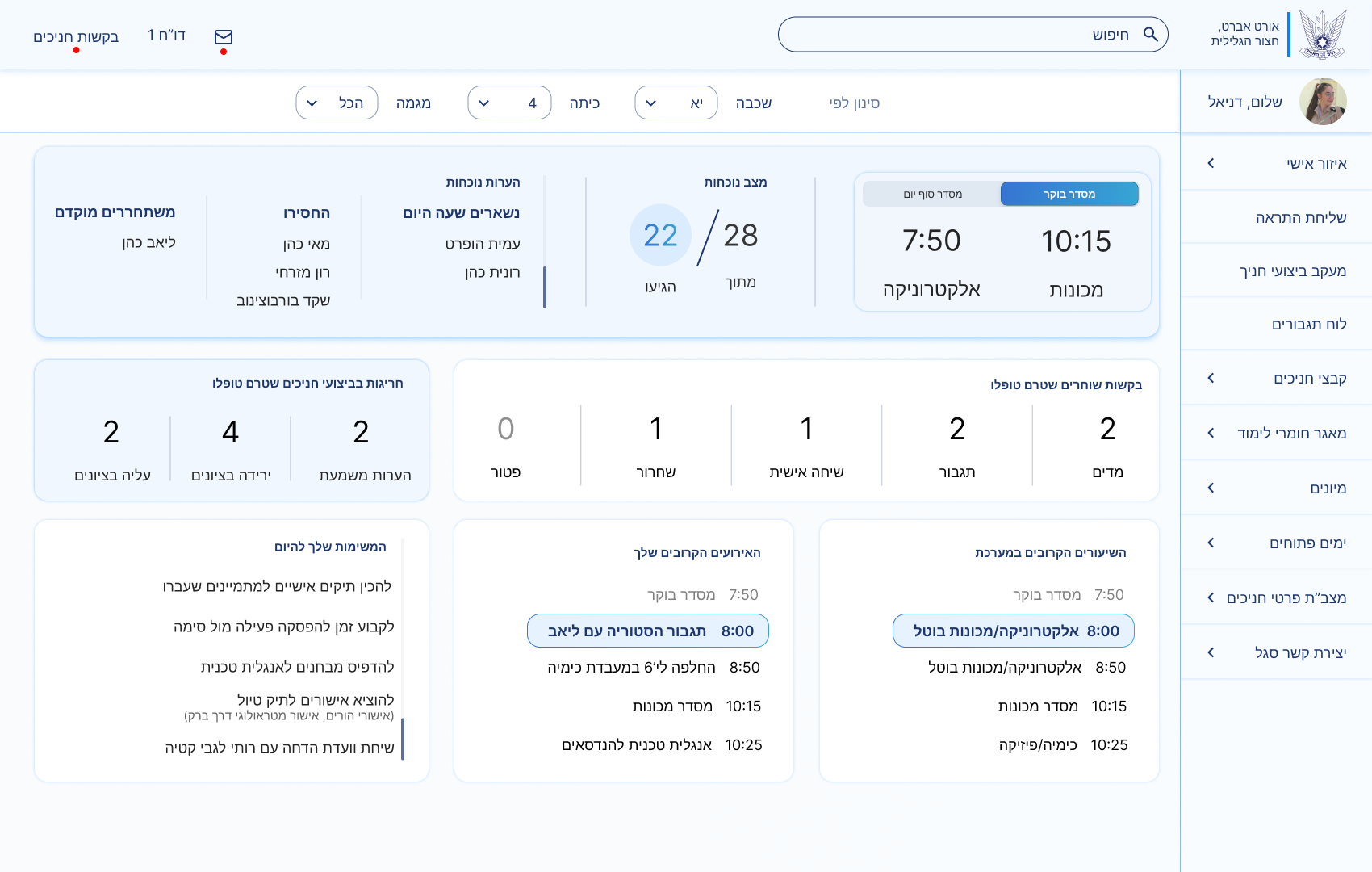
Blue Dawn dashboard highlighting behavioral and academic alerts, with and without detected changes
Dashboard view highlighting behavioral and academic alerts, with and without detected changes.

Insight To Interface

I mapped the system with sitemaps and user flows, then moved from low-fi wireframes to high-fidelity designs in Figma. I tested flows with former commanders and refined based on their feedback, especially around clarity and cognitive load. A key challenge was avoiding information overload while still giving context on each cadet's situation.

Here's how it turned out:

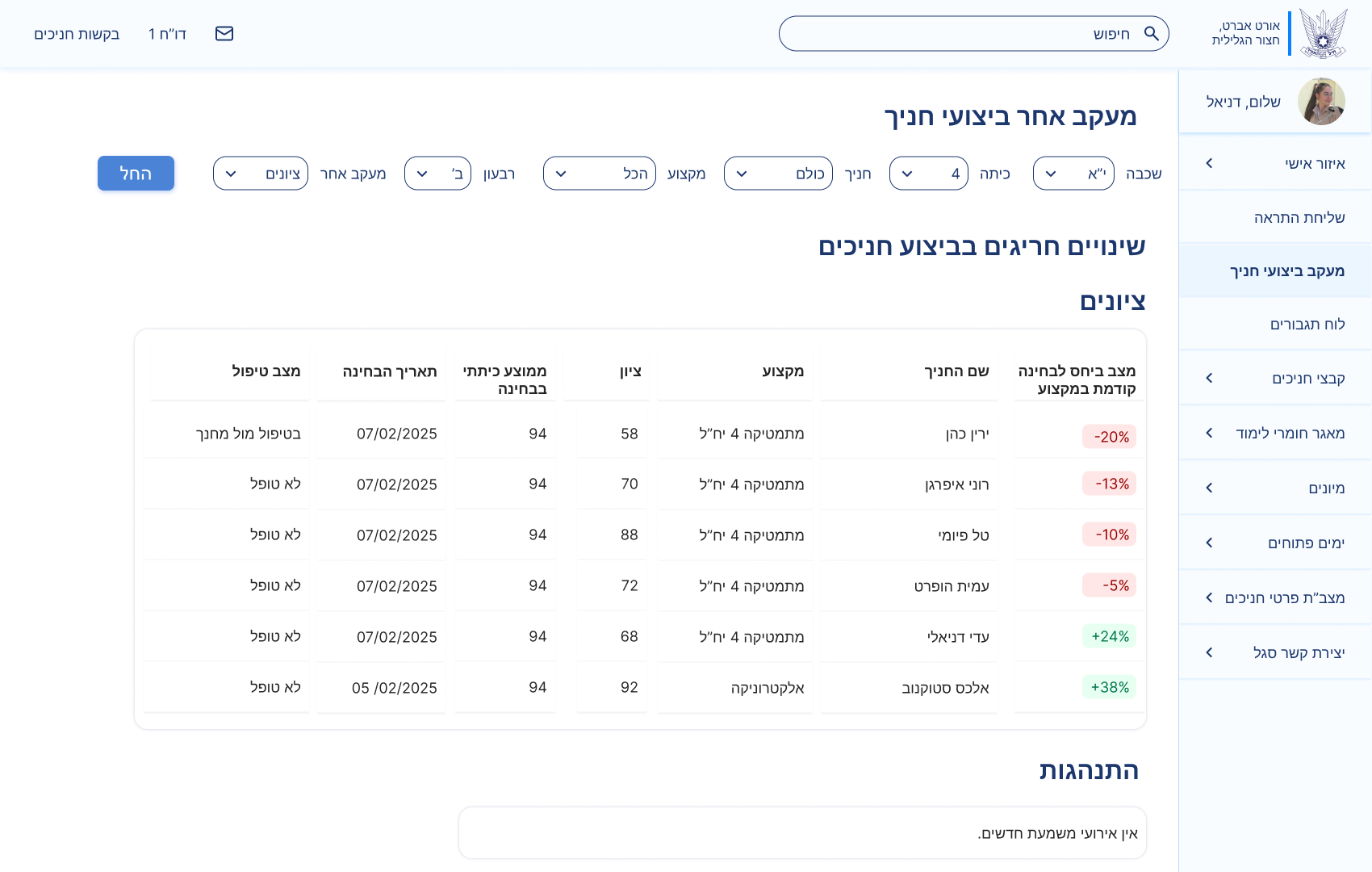
Blue Dawn class overview screen listing all academic and behavioural changes in a class of cadets
An overview of all academic and behavioural changes in a specific class of cadets, showing how well they did in comparison to their own past performances. Yarin isn't doing well let's see if we have something to worry about.
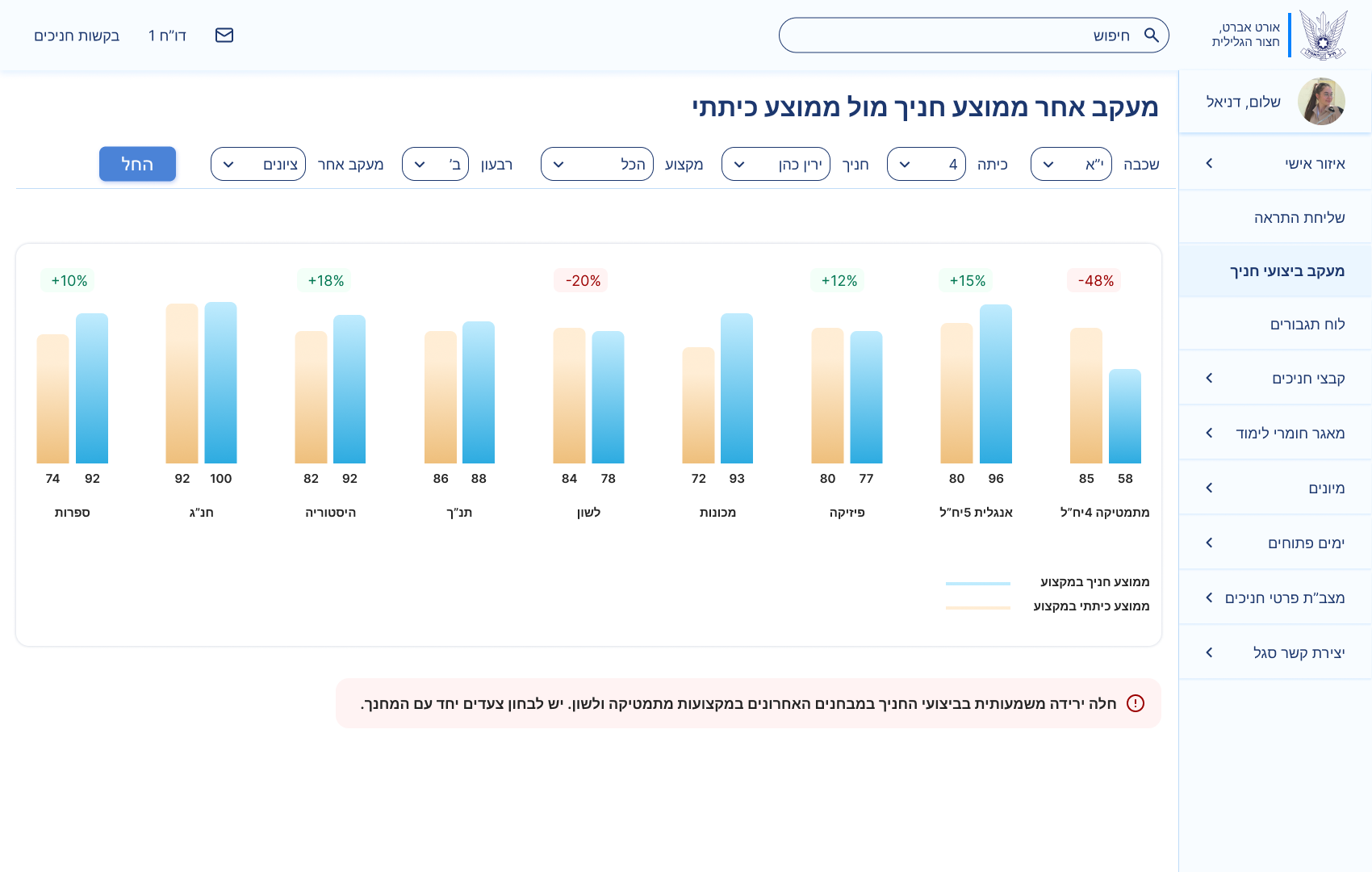
Blue Dawn screen showing Yarin's average grades across all subjects compared with the class average
This screen shows Yarin's average grades across all subjects. We can quickly spot areas of improvement or decline – math stands out as a concern. Let's compare it to the class average to understand whether it's an individual issue or just a tough exam.
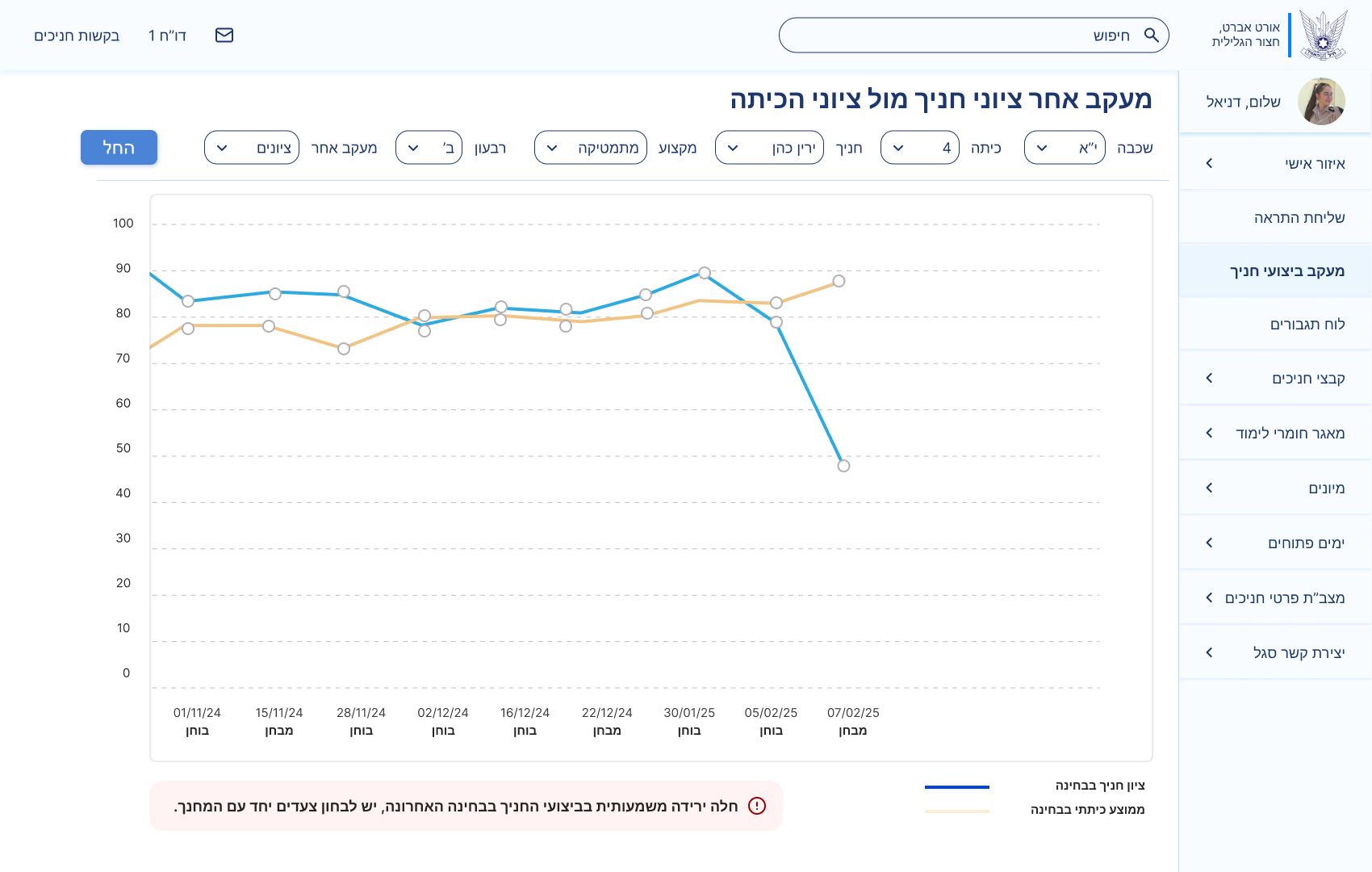
Blue Dawn screen tracking Yarin's math grades over time against the class average
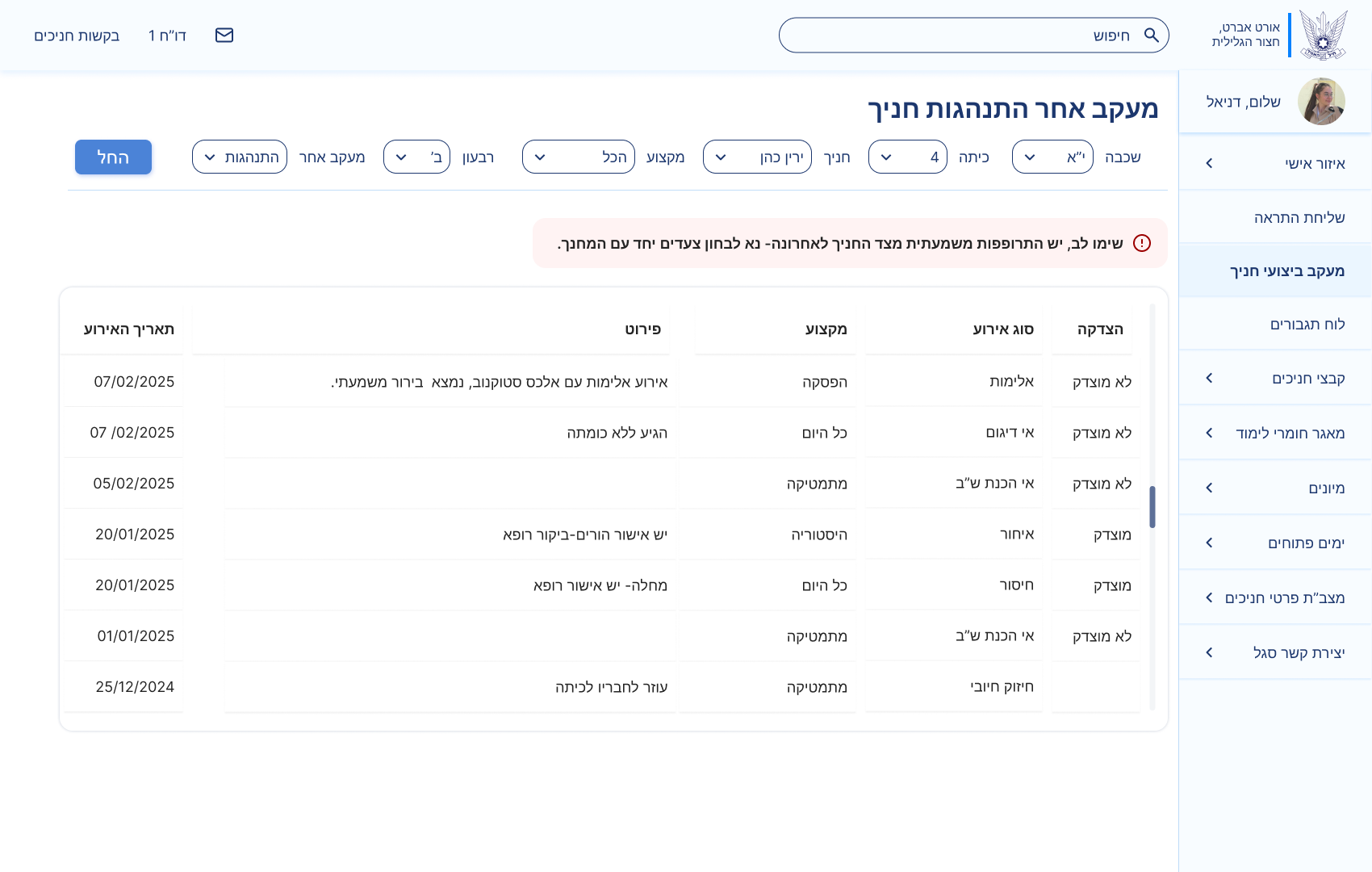
In this screen, we can see that the drop in math is specific to Yarin. To understand whether it's part of a larger pattern or simply a struggle with this subject, we'll need to check his behavioral records.
Blue Dawn behavioral records screen listing Yarin's recent incidents and notes
Yarin has been showing a pattern of behavioral challenges lately. We'll need to schedule a conversation with the classroom teacher and his parents to understand what's going on and provide the right support.

Next project

WINX