User Impact
Turn overwhelming goals into achievable daily actions, helping users build consistent progress without burnout.
Clarity. Momentum. One smart step at a time.
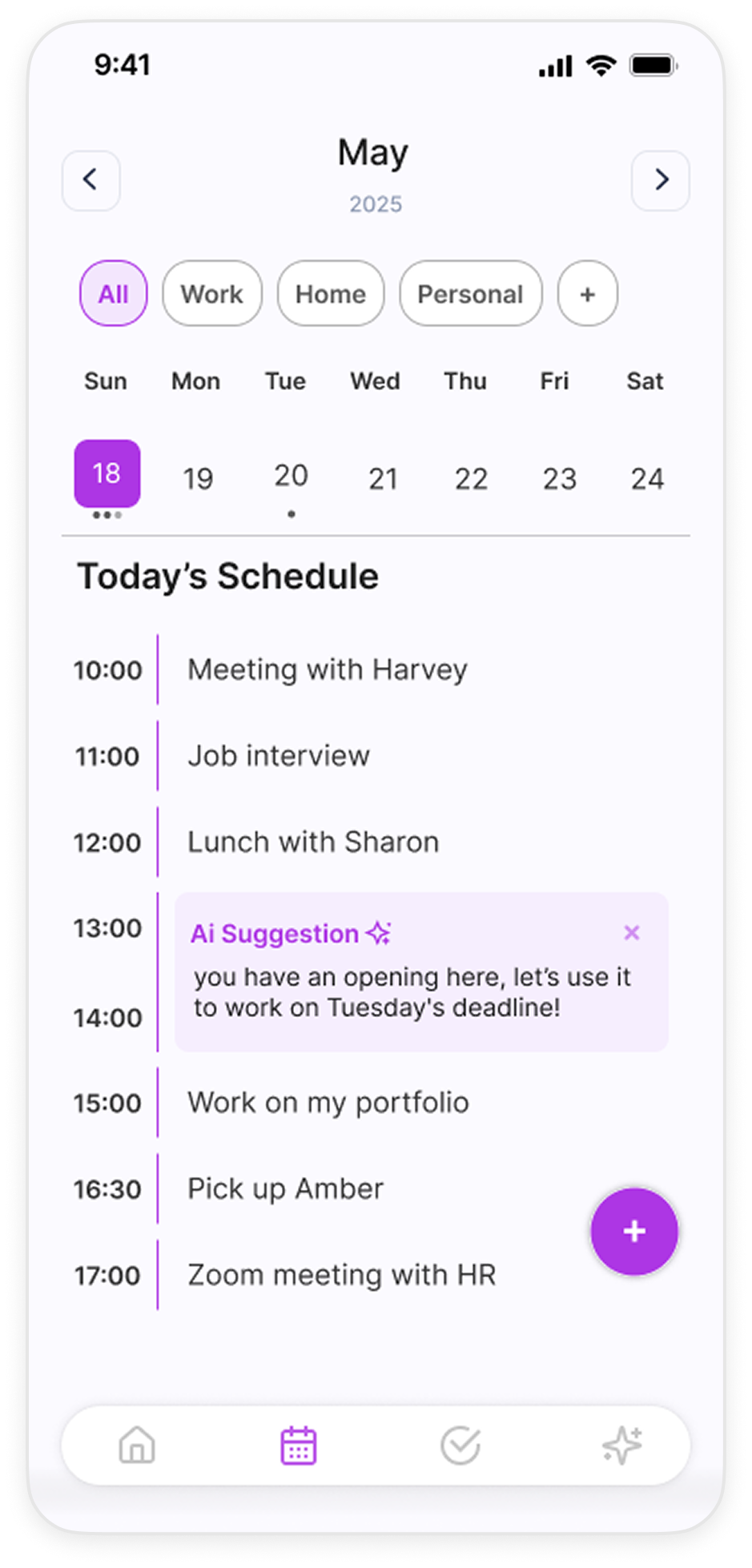
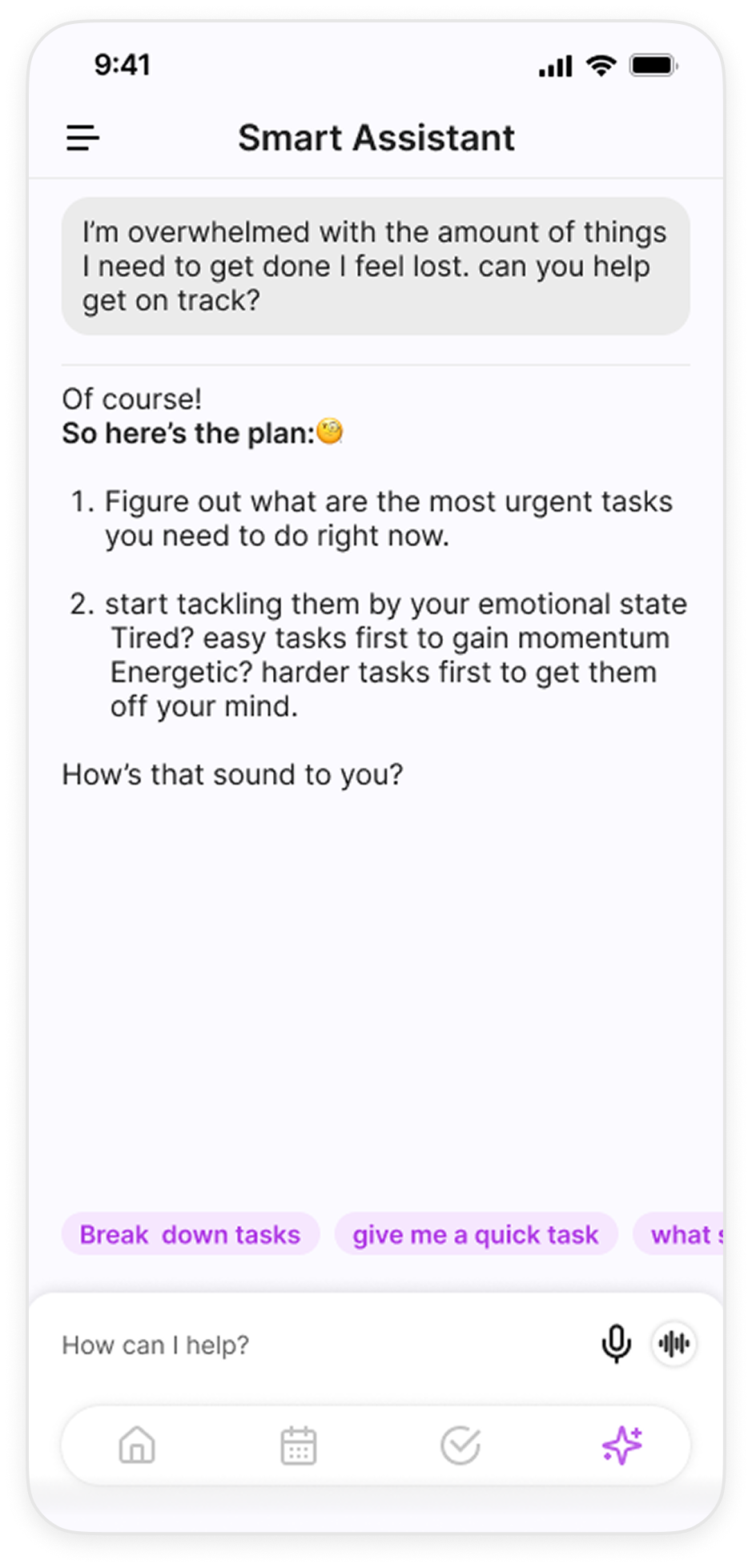
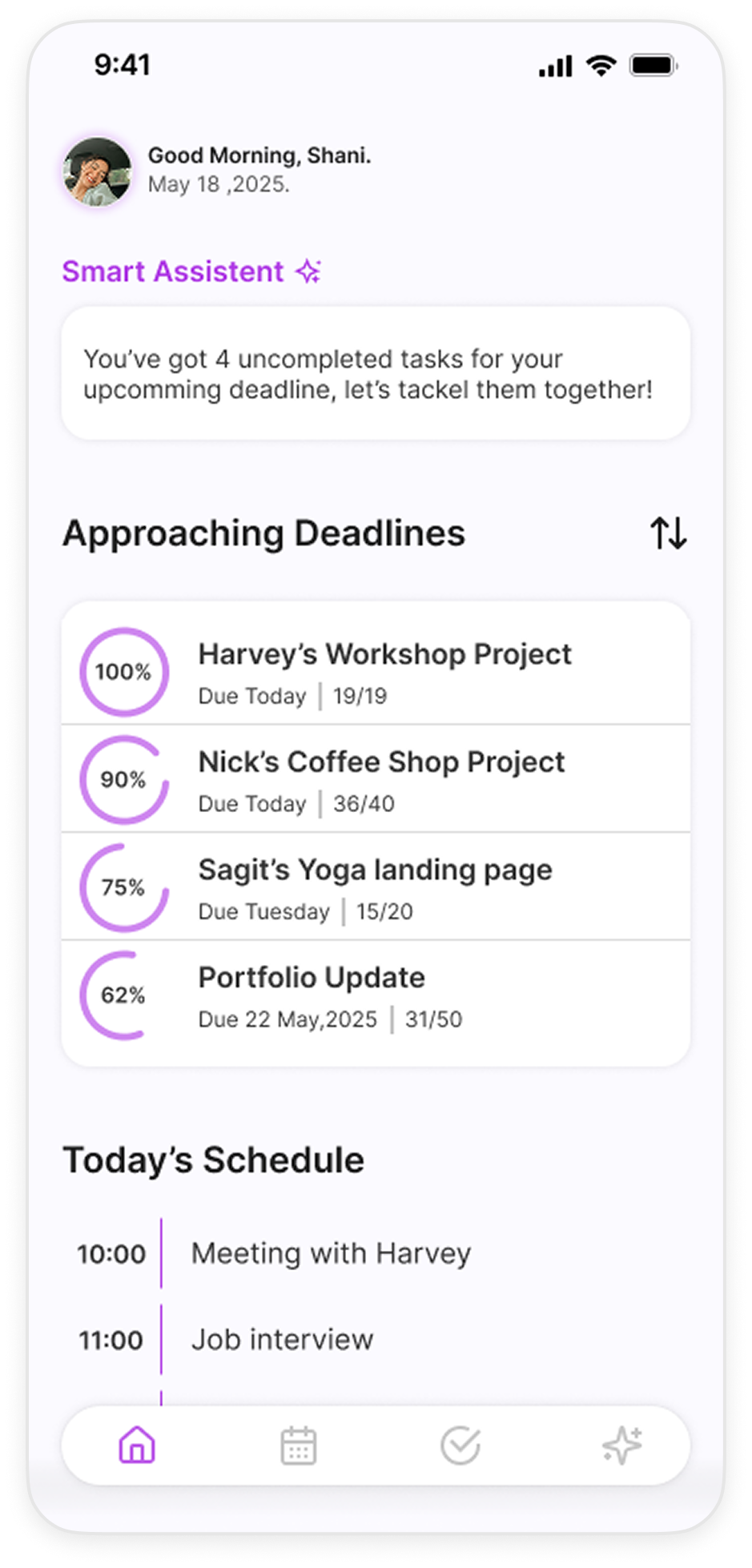
Progress Path is an AI-powered productivity app that transforms long-term goals into personalized, manageable daily actions - helping users overcome overwhelm, stay consistent, and make meaningful progress without burning out.
Turn overwhelming goals into achievable daily actions, helping users build consistent progress without burnout.
Increase activation and retention through personalized AI guidance and monetization that drives consistent engagement.
People often struggle to turn long-term goals into actionable steps. Unclear priorities, overwhelming tasks, and fluctuating motivation create a gap between setting goals and consistently acting on them.
Bridging the gap between ambition and daily execution without encouraging burnout.
I conducted 1:1 interviews with 5 participants (ages 19–30) – students, freelancers, and early professionals to understand how they pursue goals and where they fall off track.
I also validated concepts with UX peers (ages 23–51), and ran informal usability tests with my partner – a CS student managing long-term projects under pressure.
“Tell me about a personal goal or project you wanted to complete, but couldn’t stick with. What happened?”
Getting stuck when tasks feel too vague or too large to tackle.
Motivation crashes after short bursts.
Lack of connection between tasks and purpose.
Difficulty in prioritizing tasks.
Fear of failure leading to procrastination.
“I know what I want to achieve. I just don't know where to start.”
An ambitious young professional juggling multiple goals, struggling to translate long-term ambitions into consistent daily progress.
A system that translates goals into clear steps and adapts to their daily capacity.
From the outset, I defined Progress Path's role not as a goal tracker, but as a momentum enabler. The mission was to bridge the gap between intention and action - to remove friction at the exact moment users decide what to do next. Every feature was evaluated against a single question:
Does this help the user take clear, confident action today?
That lens allowed me to strip away anything that slowed execution and focus on tools that transform vague aspirations into concrete, time-bound steps.